
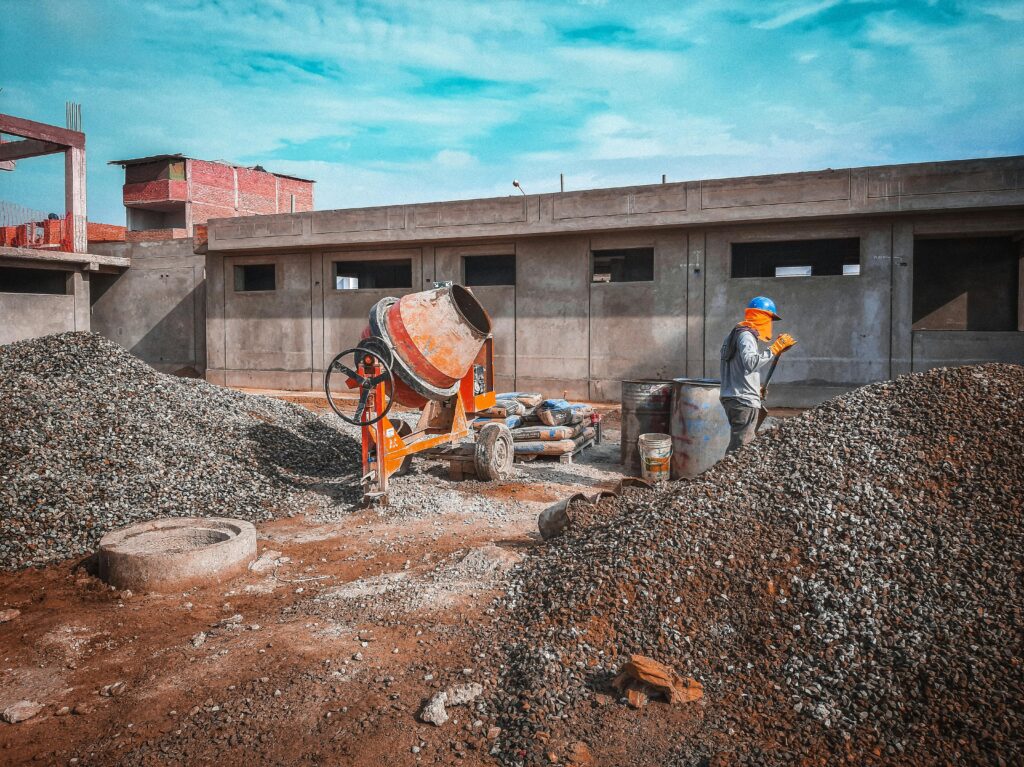
Concrete Grades and Mixing Ratios Explained

concrete mixing
  1. What is Concrete?

Concrete is the most widely used man-made construction material in the world, and it is second only to water as the most utilized and consumed material on the planet. Concrete is a heterogeneous mixture that comprises of cementitious materials-cement, water, inert aggregates (and sometimes admixtures) in required proportions.

Mixture proportioning refers to the process of determining the quantities of concrete ingredients, using local materials, to achieve the specified characteristics of the concrete.

     2. Why Concrete Mix Design Matters in Construction

These proportions are what is widely or commonly referred to as the Concrete Mix Ratios or Mixture Proportioning and they directly bring about the properties of fresh and hardened concrete.

Mixture proportioning refers to the process of determining the quantities of concrete

ingredients, using local materials, to achieve the specified characteristics of the concrete. A properly proportioned concrete mix should possess these qualities:

  1. Acceptable workability of the freshly mixed concrete
  2. Durability, strength, and uniform appearance of the hardened concrete
  3. Economy

Therefore, it is critical that the designer understands what, how and where to apply the mix ratios in order to achieve and realize the desired Grade of Concrete.

The Grade or Class of concrete is the classification of hardened concrete based on its characteristic compressive strength.

3. Main Ingredients of Concrete

The goal of producing a durable, strong and quality concrete carefully lies in the control of its main ingredients which include:  

    • Cement- Portland Cement is the most widely used cementitious ingredient in the present day construction works. There are various Types of Cement depending on their properties for different end user applications.
    • Aggregates- These include all naturally occurring, inert-granular materials such as gravel, sand, or crushed stone. However, this doesn’t limit the application of synthetic, manufactured products and recycled materials to constitute as part of aggregates composition in the concrete matrix due to innovation.
    • Water- This is “activator” or the ingredient responsible for initiating the chemical reaction between cement particles.
    • Chemical Admixtures- These are the ingredients, other than cementitious materials, water ad aggregates, that are added to the mixture immediately before or during mixing stage to change the characteristics and properties of concrete i.e. Color, setting time, water-cement ratio, etc.
 
         4. Difference Between Nominal Mix Ratio and Design Mix Ratio
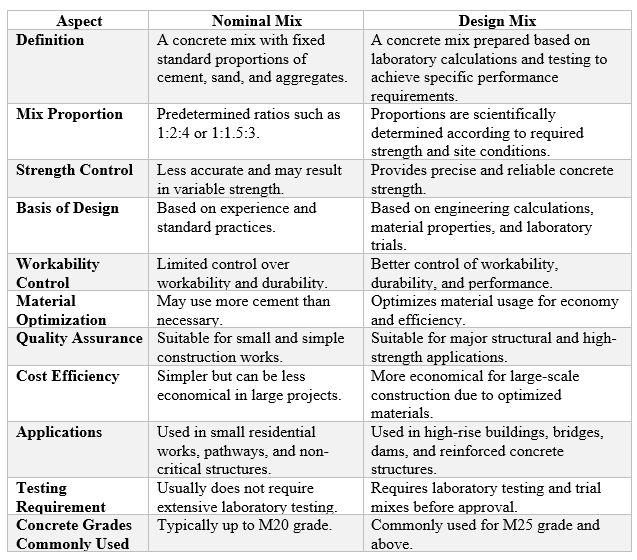
nominal vs design mix ratios
     5. Relationship Between Grade and Strength

 Concrete is generally classified according to its characteristic compressive strength expressed in N/mm2 or MPa. In the designation M10, the “M” denotes the Mix and the number “10” is the predetermined characteristic compressive strength of either 150mm Concrete Cube (for British, Indian Standards, etc.) Cube or a 150mm Diameter by 300mm Concrete Cylinder (European Standard) after curing for 28 Days.

Grade C10/M10 Implies The Hardened Concrete should attain 10N/mm/ MPa Compressive Strength after a specified Period, often 28 Days.
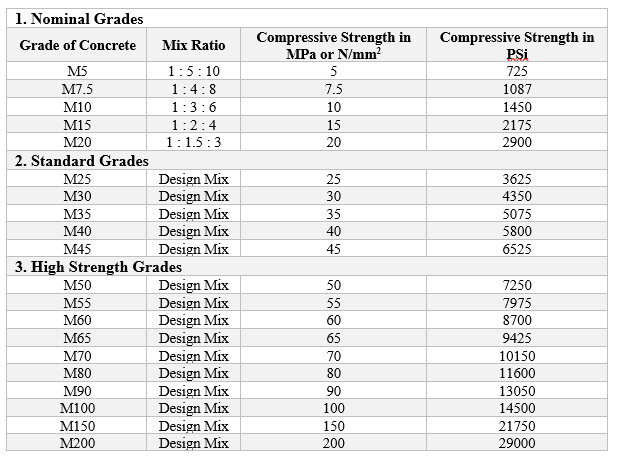
concrete grades

For M10 Grade of Concrete with a nominal ratio of 1 : 5 : 10, the designer needs to take “1 part of Cement, “5-Parts” of Fine Aggregates and “10 Parts” of Course Aggregates for a single batch. These ingredients can be measured in terms of Volume, commonly known as Volume Batching or by Weight/Mass, known as Batching by Weight
Scroll to Top